Senator Mullin's Confirmation Jitters: A Candid Look
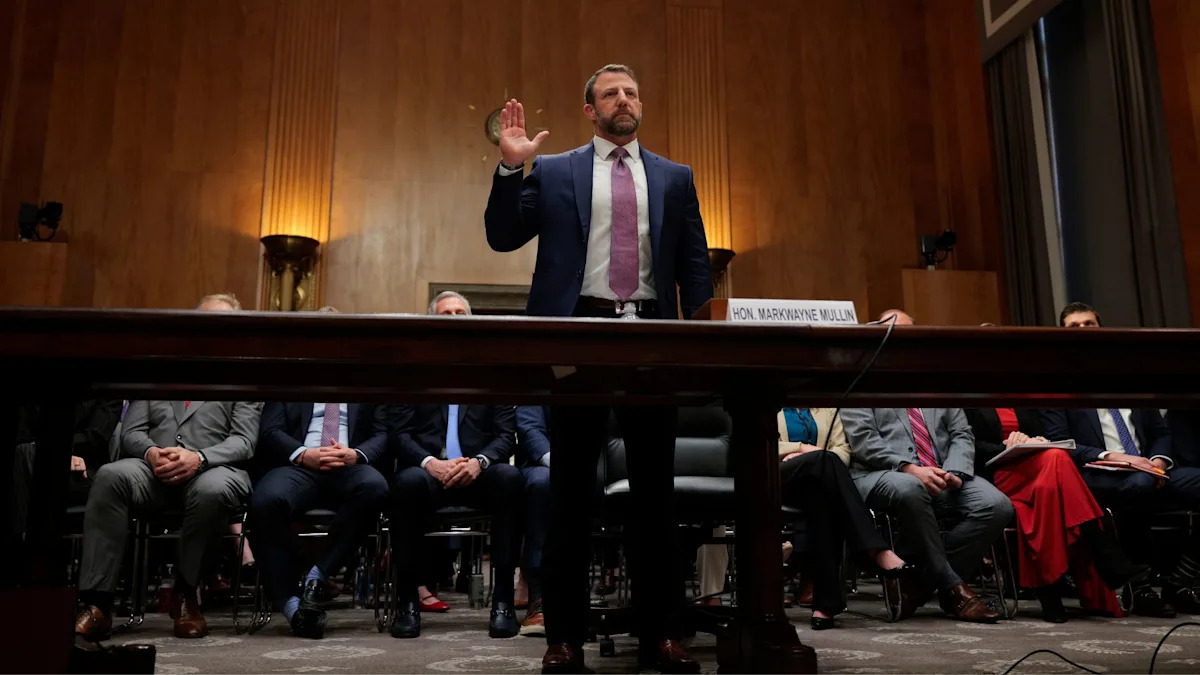
The Senate confirmation process is rarely a stroll in the park, especially when the nomination concerns a department as pivotal and often controversial as Homeland Security. Senator Markwayne Mullin, the Oklahoma Republican tapped to lead the DHS, recently found himself under the intense glare of public scrutiny during his confirmation hearing. What transpired was a high-stakes performance, punctuated by moments of strategic maneuvering, emotional candor, and perhaps, a glimpse into Mullin's secret anxieties.
The Department of Homeland Security, the third-largest federal agency, operates at the nexus of national security, immigration enforcement, and disaster response. Its leadership demands not just policy acumen but also a steady temperament, particularly in an era of heightened political polarization. As Mullin sought to replace the recently ousted Kristi Noem, his every word, gesture, and even his less-than-obvious actions were scrutinized, revealing a complex picture of a politician grappling with immense pressure and a role that could redefine his career.
The Hidden Hand: What Senator Mullin's Secret Stress Ball Revealed
In a moment that perhaps best encapsulated the underlying tension of his confirmation hearing, Senator Markwayne Mullin was observed subtly clutching a stress ball. This seemingly minor detail, caught by eagle-eyed observers, offered a powerful, unspoken narrative about the immense pressure he faced. For a politician known for his combative style and outspoken loyalty to former President Donald Trump, this quiet act provided a rare, humanizing peek behind the political curtain. The image of Senator Mullin's secret comfort mechanism wasn't just about nerves; it was a potent symbol of the invisible weight carried by those under such intense public examination.
Confirmations for cabinet positions are akin to political theater, where nominees present a carefully curated image of competence and composure. Yet, even the most seasoned politicians can succumb to the psychological toll. The stress ball wasn't just a prop; it was a physical manifestation of the internal jitters, the anxiety of needing to perform flawlessly while navigating a minefield of pointed questions. It revealed that beneath the confident rhetoric, there was a very real, human response to an incredibly high-stakes situation. This candid moment underlined that even powerful senators aren't immune to the pressures of public life, offering a relatable insight for anyone who has ever faced a high-pressure interview or public speaking engagement.
For the average citizen, this small detail serves as a reminder to look beyond the scripted answers and official statements. Body language, subtle cues, and even an anachronistic stress ball can offer profound insights into the true state of mind of our leaders. Mullin's public persona might be one of unwavering resolve, but this senator Mullin secret gesture hinted at a deeper layer of human vulnerability, perhaps a hidden battle with the very real demands of a politically charged environment.
Navigating the Immigration Minefield: Mullin's Strategic Balancing Act
A central theme of Mullin's hearing was, inevitably, immigration policy. The Department of Homeland Security is at the forefront of the nation's approach to border security and enforcement, and under the previous administration, it became synonymous with aggressive policies and mass deportations. Mullin, a staunch Republican, faced the challenge of demonstrating loyalty to Trump's hard-line agenda while simultaneously attempting to appeal to wary Democrats demanding restraints on enforcement officers.
His testimony was a masterclass in strategic rhetoric. While affirming his commitment to the core tenets of Trump's immigration priorities, Mullin also exhibited a notable softening on some of the administration's most contentious policies. Perhaps the most striking example was his retraction of a previous comment describing a Minneapolis man killed by federal officers as "deranged." "I shouldn't have said that and as secretary, I wouldn't," he conceded. This wasn't merely an apology; it was a calculated move to demonstrate a capacity for growth and a willingness to adopt a more measured tone, a critical quality for a DHS Secretary whose actions directly impact countless lives.
This balancing act extended to the practicalities of immigration enforcement. When pressed on whether DHS would meet a daily quota of 3,000 immigration arrests, Mullin deftly stated that no such quota had been set for him. He also addressed concerns about federal officers using administrative warrants to forcibly enter homes, asserting that, as Secretary, officers would generally require warrants signed by a judge, except in limited circumstances. These responses, while aligning with the broader Republican stance, also showed a subtle shift towards addressing constitutional concerns, indicating a potential senator Mullin secret strategy to bridge ideological divides and secure confirmation.
Temperament Under Scrutiny: Leadership Beyond the Combative Style
Beyond policy specifics, a significant line of questioning revolved around Mullin's temperament for a high-pressure Cabinet post. Known for his combative style in the Senate, senators were keen to assess how he would lead a department that demands nuanced decision-making, diplomatic engagement, and the ability to de-escalate rather than inflame. The confirmation hearing offered a mixed bag of responses: moments of intense emotion, particularly when discussing his family's relationship with Trump and his commitment to the former president's agenda, contrasted with fierce pushback against critics.
His aspiration to take DHS out of the daily headlines—"My goal in six months is that we’re not in the lead story every single day"—revealed a desire for stability, a stark contrast to the often-turbulent tenure of his predecessor. This statement, delivered amidst a hearing that saw him fight back at some moments and become emotional at others, underscored the inherent tension in his leadership style. The challenge for Mullin, and for any nominee, is to convince senators that their public persona translates effectively into the demanding realities of executive leadership. The stress ball, in this context, might even be interpreted as a coping mechanism for managing that very public display of temperament.
Leadership in such a critical department requires not just strength but also a deep capacity for empathy and an unwavering commitment to ethical governance. His retractions and measured statements on certain controversial policies could be interpreted as a senator Mullin secret acknowledgment of these demands, an attempt to signal that while his loyalty remains firm, his approach to governance would be more pragmatic and less inflammatory than some of his past rhetoric suggested.
The Unseen Challenges: Funding and the Future of DHS
Underlying all policy debates and questions of temperament was the critical issue of funding. Mullin repeatedly emphasized the urgent need to restore routine funding for the Department of Homeland Security, which had been caught in a weekslong standoff due to Democratic demands for restraints on immigration officers. "We have to get DHS funded," he reiterated to senators, underscoring a fundamental operational challenge that would immediately confront him as Secretary.
An underfunded DHS affects everything from border patrol operations and cybersecurity initiatives to disaster preparedness and the processing of immigration claims. Mullin's forceful advocacy for funding highlights a practical reality often overshadowed by political rhetoric: the efficacy of any policy, regardless of its ideological leaning, is contingent upon adequate resources. The stability he sought to project, and the operational improvements he promised, would be impossible without the necessary budget. This is a senator Mullin secret challenge that isn't about policy or personality, but about the fundamental mechanics of government, impacting national security and daily life across the country.
Tips for Analyzing High-Stakes Confirmations:
- Look Beyond the Script: Pay attention to body language, spontaneous remarks, and any subtle deviations from prepared statements.
- Track Retractions and Revisions: Nominees often soften or clarify previous contentious remarks. Analyze what these shifts signify about their potential approach to the role.
- Identify Strategic Balancing Acts: Observe how nominees navigate conflicting pressures from different political factions.
- Consider the "Human Element": Moments of emotion or vulnerability, like the stress ball incident, can reveal the true pressure a nominee is under.
- Focus on Operational Realities: Beyond ideological debates, understand the practical challenges (like funding) that will define a leader's effectiveness.
Conclusion: The Secret Behind the Senator's Persona
Senator Markwayne Mullin's confirmation hearing was a complex tapestry woven with political strategy, personal conviction, and undeniable human pressure. From his strategic softening on contentious immigration policies to his emotional moments and the telling glimpse of a stress ball, every element contributed to a multifaceted portrait. The "secret" aspects of Senator Mullin's performance weren't just about a hidden object; they encompassed the unseen anxieties, the underlying strategies to navigate a deeply polarized political landscape, and the unspoken pressures of taking on one of the most challenging roles in government. As the nation awaits a decision on his nomination, one thing is clear: leading the Department of Homeland Security requires more than just political will—it demands a leader who can manage both the visible storms and their own unseen jitters, embodying a public strength while acknowledging a very human vulnerability.