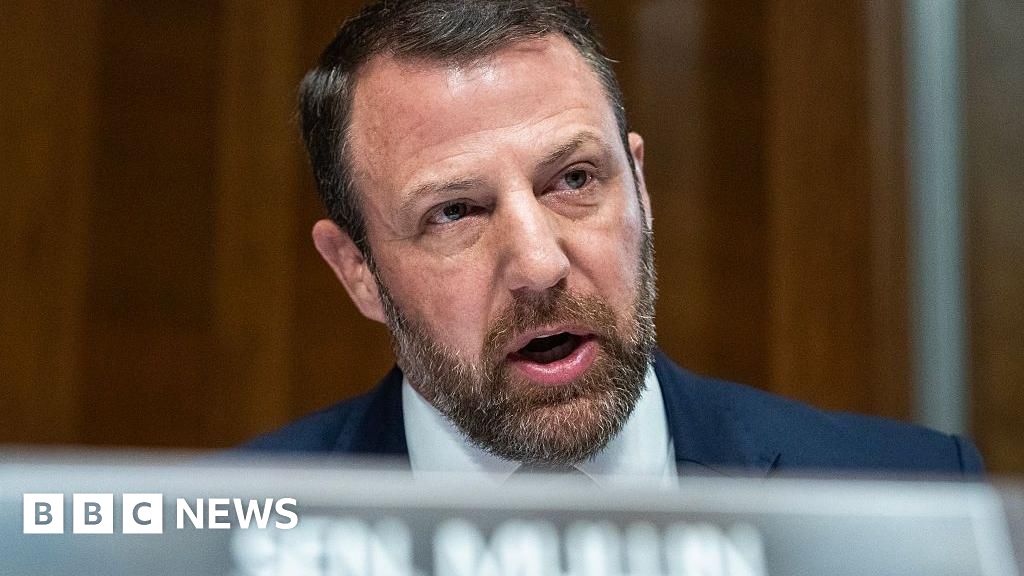
Markwayne Mullin's Tense DHS Hearing: Beyond the Stress Ball
In the high-stakes arena of Washington D.C., every gesture, every word, and even every unspoken detail can be magnified under the intense glare of public scrutiny. This was undeniably the case for Senator Markwayne Mullin during his recent confirmation hearing for Secretary of the Department of Homeland Security (DHS). While the public watched his policy pronouncements and contentious exchanges, a more subtle, yet telling, detail emerged: the Oklahoma Republican was observed discreetly clutching a stress ball. This small, seemingly insignificant object offers a fascinating glimpse into the immense pressure of a Cabinet nomination, revealing a deeper narrative beyond the polished facade and policy debates. It begs the question: what does senator mullin secret coping mechanism tell us about the man, the role, and the relentless demands of national leadership?
The High Stakes: Mullin's Vision and Trump's Agenda
Mullin’s appearance before the Senate Homeland Security and Governmental Affairs Committee was his inaugural public opportunity to lay out his vision for the government’s third-largest department. His nomination came at a tumultuous time, following the departure of the controversial former DHS Secretary Kristi Noem, and with the department embroiled in ongoing funding disputes. Democrats had, for weeks, withheld routine DHS funds, demanding greater accountability and restraints on immigration officers, particularly after tragic incidents involving federal agents.
Mullin aimed to project an image of a "steady hand" capable of navigating a department frequently mired in controversy. He articulated a clear goal: "My goal in six months is that we’re not in the lead story every single day." This aspiration underscored the urgent need for stability and effective leadership within DHS. However, his nomination also signaled an intention to align closely with President Donald Trump’s hard-line immigration priorities, particularly the push for mass deportations. This dual approach—promising stability while embracing potentially divisive policies—set a challenging tone for his testimony. The political tightrope Mullin had to walk was evident as he passionately called for the restoration of DHS funding, stating emphatically, "We have to get DHS funded," recognizing the critical need for operational resources despite the political gridlock.
Temperament Under Scrutiny: From Combative to Contrite
Mullin's past record, marked by a combative style and unwavering loyalty to President Trump, naturally invited questions about his temperament and suitability for a Cabinet post requiring measured diplomacy. During the hearing, he demonstrated a complex mix of emotions. At times, he became visibly emotional, speaking of his family's relationship with Trump and his profound commitment to the president's agenda. Yet, this vulnerability was juxtaposed with moments of sharp assertiveness, including a heated exchange with the committee chair that underscored his often-confrontational nature.
Crucially, Mullin also demonstrated a capacity for retraction and self-correction, a quality often sought in high-level appointees. He pulled back from previous contentious statements, notably retracting his description of Alex Pretti, a Minneapolis man killed by federal officers, as “deranged.” He admitted, “I shouldn’t have said that and as secretary, I wouldn’t.” This softening of rhetoric extended to his stance on federal officers forcibly entering homes. While acknowledging past practices of using administrative warrants, Mullin clarified that under his leadership, officers would only use warrants signed by a judge, except in extremely limited circumstances—a move aimed at addressing constitutional concerns previously raised.
These retractions, coupled with his emotional responses, painted a picture of a nominee grappling with the immense pressure to adapt his public persona and policy interpretations to suit the demands of a Cabinet role. The challenge lies in convincing skeptical senators that this newfound contrition represents a genuine shift, rather than a mere strategic repositioning. It is in this crucible of conflicting expectations and intense personal scrutiny that the underlying stress of the situation truly manifests.
The Unseen Pressure: Senator Mullin's Secret and Public Perception
Amidst the detailed policy discussions and the visible displays of emotion, the most telling indicator of the raw pressure Mullin faced was the inconspicuous stress ball he reportedly clutched. This quiet act revealed senator mullin secret struggle to manage his nerves on what was undoubtedly his largest national stage yet. For a seasoned politician who served a decade in the U.S. House before becoming a Senator in 2023, this was still a new level of scrutiny, taking on a role that governs a department central to some of the nation's most contentious issues.
The image of Mullin secretly squeezing the stress ball offers a powerful contrast to the often-aggressive, confident persona he projects. It humanizes him, illustrating that even the most formidable figures in politics are susceptible to the immense psychological demands of such high-stakes events. Stress balls are known for their ability to provide a tactile outlet for tension, helping to ground individuals and channel nervous energy. This coping mechanism speaks volumes about the internal turbulence he was experiencing, even as he fought back tears or engaged in combative exchanges. For a deeper dive into this specific moment, readers can explore Mullin's Secret Stress Ball: Unseen Nerves at DHS Hearing.
From a psychological standpoint, this hidden gesture highlights the pressure to perform perfectly under intense public and political scrutiny. Nominees are expected to be articulate, confident, and unshakeable. Any sign of weakness or vulnerability can be exploited. Mullin's use of the stress ball, though concealed, offers a rare, candid glimpse into the emotional toll such proceedings can take. It serves as a reminder that behind the political theater are individuals navigating immense personal and professional challenges. To understand the broader context of these anxieties, consider reading Senator Mullin's Confirmation Jitters: A Candid Look.
Practical Insights: Coping with High-Pressure Situations
- Acknowledge the Stress: It's normal to feel nervous. Recognizing and accepting this can be the first step in managing it.
- Find a Physical Outlet: Like Mullin's stress ball, subtle physical actions (e.g., isometric exercises, deep breathing, even fidgeting) can help release tension.
- Prepare Thoroughly: Knowledge and preparation build confidence, reducing the likelihood of being caught off guard.
- Practice Mindfulness: Focusing on the present moment can prevent runaway thoughts and anxieties about future outcomes.
- Maintain Perspective: Remember the bigger picture and the importance of the role, which can help reframe personal jitters.
Navigating the DHS Maze: Challenges and Opportunities
If confirmed, Mullin would step into a role fraught with complex challenges. Trump’s immigration agenda, specifically the policy of mass deportations, stands at a critical juncture, with public sentiment increasingly souring on aggressive enforcement operations. Mullin would face immense pressure to deliver on Trump's objectives while simultaneously contending with a politically divided Congress and a skeptical public.
His testimony offered glimmers of how he might approach these challenges. By retracting certain inflammatory statements and clarifying enforcement policies, he appeared to be attempting to soften the edges of a hard-line stance, potentially seeking a pathway to broader acceptance. However, his loyalty to Trump's overarching agenda remains a cornerstone of his appeal to his base and a point of contention for Democrats. His assertion that no daily quota of 3,000 immigration arrests had been set for him was a crucial detail, aiming to dispel concerns about an arbitrary and aggressive enforcement target.
The ongoing battle for routine DHS funding will also be a major test. Mullin's emphasis on restoring these funds highlights his recognition of the department's operational needs, from border security to cybersecurity and disaster response. His ability to lead effectively will depend not only on his policy decisions but also on his capacity to navigate the intricate political landscape and build consensus where little currently exists.
Markwayne Mullin’s DHS confirmation hearing was a microcosm of contemporary American politics: intense, emotionally charged, and deeply polarized. His performance—a blend of firm resolve, emotional vulnerability, and strategic retractions—painted a picture of a nominee striving to balance political loyalty with the demands of a critical executive role. The "secret" stress ball, quietly held throughout the proceedings, stands as a poignant symbol of the unseen pressures that accompany such significant national service, reminding us that even the most powerful figures contend with profound stress under the spotlight. His journey through the confirmation process, and potentially into the leadership of DHS, underscores the enduring complexity of governing in an era of deep division.